
Knowing for poisons and their antidotes, remains one of the most vital health safety. This saves life as their might be no time to resuscitate the affected person, before medical attention is administered.
Understanding some deadly toxins is a critical component of forensic toxicology and emergency medicine. Below are five of the most significant artificial or chemically refined poisons that present a lethal risk when ingested, along with their clinical mechanisms and medical antidotes.
1. Cyanide (Sodium/Potassium Salts)
This is a well-known chemical poison, which is often associated with industrial use in gold mining, electroplating, and chemical synthesis. It is highly soluble and can be easily dissolved in beverages.
- Mechanism of Toxicity: Cyanide acts as a chemical asphyxiant. It binds to the iron atom in the enzyme cytochrome c oxidase within the mitochondria. This prevents cells from using oxygen to produce energy (ATP), essentially “suffocating” the body at a cellular level even if the person is breathing.
- Lethal Indicators: Rapid onset of shortness of breath, cherry-red skin (due to oxygen-saturated blood that cells cannot use), and a distinct “bitter almond” odor on the breath.
Antidotes
Treatment must be given immediately, otherwise death might occur. The standard protocol involves:
- Hydroxocobalamin (Cyanokit): This is the modern gold standard. It reacts with cyanide to form cyanocobalamin (Vitamin B12), which is safely excreted by the kidneys.
- Sodium Nitrite & Sodium Thiosulfate: Nitrites convert hemoglobin to methemoglobin, which has a high affinity for cyanide, pulling it away from the mitochondria. Thiosulfate then helps convert the cyanide into thiocyanate, which is non-toxic.
2. Pesticides
P pesticides are synthetic chemicals used widely in agriculture (e.g., malathion, parathion). Because they are readily available in markets as “pest control” products, they are frequently involved in accidental or intentional ingestions.
- Mechanism of Toxicity: They inhibit the enzyme acetylcholinesterase, which is responsible for breaking down the neurotransmitter acetylcholine. This leads to a “cholinergic crisis”—a massive overstimulation of the nervous system.
- Lethal Indicators: The “SLUDGE” syndrome: Salivation, Lacrimation (tears), Urination, Defecation, Gastrointestinal distress, and Emesis (vomiting). Death usually occurs via respiratory failure.
Antidotes
- Atropine: A powerful competitive antagonist that blocks acetylcholine receptors, “drying up” the secretions and slowing the heart rate back to normal.
- Pralidoxime (2-PAM): This acts as an “enzyme regenerator.” It unbinds the organophosphate from the enzyme, allowing the body to regain control of its nervous system.
3. Arsenic
Commonly known as “King of Poisons,” arsenic is a heavy metal found in some older pesticides and industrial preservatives. It is odorless and tasteless when mixed with food, making it notoriously difficult to detect without testing.
- Mechanism of Toxicity: Arsenic disrupts cellular metabolism by inhibiting various enzymes, particularly those in the citric acid cycle. It also interferes with ATP production and causes massive oxidative stress, leading to multi-organ failure.
- Lethal Indicators: Severe “rice-water” diarrhea, abdominal pain, and a garlic-like breath odor. Chronic exposure leads to distinct skin lesions and “Mees’ lines” on the fingernails.
Antidotes
- Dimercaprol (British Anti-Lewisite / BAL): A chelating agent that binds to the arsenic in the bloodstream, forming a stable complex that the body can filter out through the urine.
- Succimer (DMSA): A water-soluble analog of BAL often used for less acute but still life-threatening cases.
4. Ethylene Glycol (Antifreeze)
While technically an industrial solvent, ethylene glycol is a clear, sweet-tasting liquid that can be mistakenly or intentionally added to sugary drinks or food.
- Mechanism of Toxicity: The substance itself is not the primary killer; rather, its metabolites are. The liver breaks it down into glycolic acid and oxalic acid. Oxalic acid then binds with calcium to form calcium oxalate crystals, which physically shred the kidneys from the inside out.
- Lethal Indicators: Initial symptoms resemble alcohol intoxication (slurred speech, stumbling), followed by severe metabolic acidosis and eventual kidney failure.
Antidotes
- Fomepizole: This drug inhibits alcohol dehydrogenase, the enzyme that breaks ethylene glycol down into its toxic metabolites. By “pausing” this process, the body can safely excrete the parent chemical.
- Ethanol: In emergencies where fomepizole is unavailable, medical-grade ethanol is used. The enzyme prefers ethanol over ethylene glycol, effectively keeping the enzyme “busy” while the toxin is cleared.
5. Strychnine
Strychnine is a highly potent alkaloid used mainly as a rodenticide (rat poison). It is a white, bitter crystalline powder.
- Mechanism of Toxicity: It acts as a potent antagonist of glycine, an inhibitory neurotransmitter in the spinal cord and brain. By blocking the “brakes” of the nervous system, it causes every muscle in the body to contract simultaneously.
- Lethal Indicators: Violent convulsions where the body arches backward (opisthotonus) and a fixed, grimacing expression known as risus sardonicus. The victim remains fully conscious and in extreme pain until death by exhaustion or asphyxiation.
Antidotes
Strychnine has no direct chemical antidote. Treatment is purely supportive and focused on survival:
- Benzodiazepines (e.g., Diazepam): High doses are used to control muscle spasms and prevent the body from “snapping” its own bones or overheating.
- Neuromuscular Blockers: In severe cases, the patient is paralyzed medically and placed on a ventilator until the toxin is metabolized by the liver.
Comparison of Lethal Toxins and Treatments
| Poison | Common Source | Primary Mechanism | Primary Antidote |
|---|---|---|---|
| Cyanide | Industrial Salts | Cellular Asphyxiation | Hydroxocobalamin |
| Organophosphates | Pesticides | Cholinergic Crisis | Atropine / Pralidoxime |
| Arsenic | Heavy Metals | Enzyme Inhibition | Dimercaprol (BAL) |
| Ethylene Glycol | Antifreeze | Metabolic Acidosis | Fomepizole |
| Strychnine | Rodenticides | Glycine Antagonism | Benzodiazepines (Supportive) |
Common poison antidote in Nigeria
Just as food poisoning has become a common practice in some parts of Nigeria, here are some local antidotes to administer immediately, before rushing to the hospital:
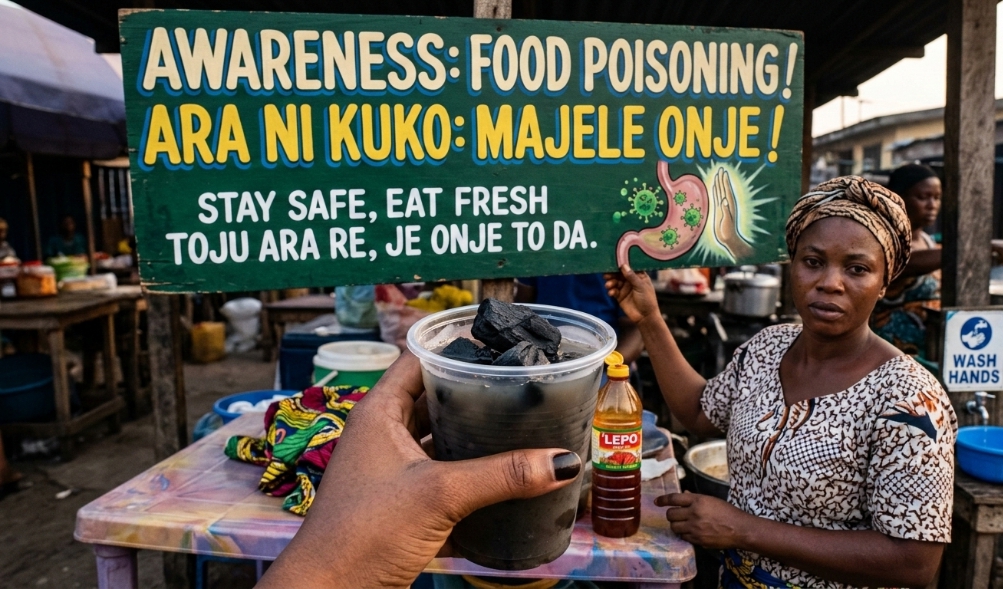
1. Palm Oil (Lepo)
Red palm oil is perhaps the most ubiquitous “universal antidote” in Nigerian households. It is the first thing administered for everything from swallowed kerosene to suspected food poisoning.
- Traditional Use: It is believed to “neutralize” the poison or coat the stomach lining to prevent absorption.
- The Science: Palm oil does not chemically neutralize toxins. However, because it is a dense lipid, it can slow down the gastric emptying process.
- The Risk: The biggest danger with palm oil is aspiration. If a victim is semi-conscious and palm oil is forced down their throat, it can enter the lungs, causing lipoid pneumonia, which is often more fatal than the original poison.
2. Activated Charcoal (Unyi)
While modern hospitals use medical-grade activated charcoal, many Nigerians use traditional charcoal (from burnt wood) crushed into water.
- Traditional Use: Used to “suck out” the poison from the belly.
- The Science: This is one of the few local remedies with a strong scientific basis. Charcoal has a massive surface area that binds to many toxins (adsorption), preventing them from entering the bloodstream.
- The Caveat: Household charcoal is not as “activated” (processed with high-pressure steam) as medical charcoal, so it is significantly less effective. It also does not work on alcohols, cyanide, or heavy metals.
3. Raw Egg Whites
In many communities, if a child swallows a caustic substance or a heavy metal-based paint, they are forced to swallow several raw egg whites.
- Traditional Use: To “trap” the poison and induce vomiting.
- The Science: This is a classic “demulcent.” The proteins in the egg (albumin) can bind to certain heavy metals like mercury or lead and caustic acids. By binding to the egg protein instead of the stomach lining, the poison’s impact is reduced.
- The Risk: Raw eggs carry a risk of Salmonella, though in an acute poisoning emergency, this is usually considered a secondary concern.
4. Bitter Leaf (Ono/Ewuro) Juice
The squeezed extract of Vernonia amygdalina (Bitter Leaf) is often administered in cases of suspected “spiritual” or herbal poisoning.
- Traditional Use: It is used as a potent detoxifier and emetic (to induce vomiting).
- The Science: Bitter leaf contains bitter glycosides and alkaloids that stimulate the gallbladder and liver. While it may help the liver process certain mild toxins, its main “benefit” in an emergency is usually its intense bitterness, which often triggers the gag reflex, causing the victim to expel the stomach contents.
5. Milk (Liquid or Evaporated)
Milk is frequently used in Nigeria as an antidote for the ingestion of acidic or alkaline household cleaners (like bleach or “Otapiapia”).
- Traditional Use: To “dilute” the poison and soothe the throat.
- The Science: Milk acts as a buffer. It can help neutralize small amounts of acid and provides a coating for the esophagus.
- The Risk: In cases of fat-soluble poisons (like some pesticides), milk can actually increase the rate of absorption into the body, making the situation worse.






 Doctor Brandy Harmon