
Deadly soft drinks to avoid in Nigeria, are listed out in this article; just as NAFDAC (National Agency for Food and Drug Administration and Control) have identified specific ingredients in these beverages that, when consumed regularly, significantly increase the risk of life-threatening conditions such as type 2 diabetes, kidney failure, and cardiovascular disease.
The path to a healthier Nigeria begins with what we choose to drink. While these beverages are not “poison” in the sense that they kill instantly, their cumulative effect on the liver, kidneys, and heart is devastating. The ingredients like High Fructose Corn Syrup, Sodium Benzoate, and Synthetic Dyes are cheap for manufacturers but expensive for the consumer’s health.
To protect yourself, consider switching to natural alternatives like Zobo (hibiscus tea), freshly squeezed fruit juices (without added sugar), or the ultimate life-saver: pure water.
If you must know, Nigeria has one of the highest rates of soft drink consumption in Africa. In a climate that is often hot and demanding, a cold, fizzy drink is frequently the first choice for thirst. However, behind the colorful labels and refreshing bubbles lies a cocktail of chemicals and sugars that are contributing to a growing health crisis in the country.
To understand why certain drinks are considered more harmful than others, we must look at their specific chemical makeup and how those ingredients interact with the human body. Below are five categories of soft drinks—exemplified by popular brands—that pose the greatest risk to Nigerian consumers.
1. High-Sugar Cola Drinks (e.g., Coca-Cola)
Coca-Cola is perhaps the most iconic beverage in Nigeria, found in every “mama-put” and supermarket. While it is beloved for its taste, its primary ingredient is majorly sugar.
The Harmful Ingredients:
- High Sugar Content: A standard 60cl bottle of Coke in Nigeria can contain up to 65 grams of sugar, which is roughly 16 cubes. This is nearly double the World Health Organization’s (WHO) recommended daily limit for an adult.
- Phosphoric Acid: This gives the drink its “tang” and prevents the growth of mold. However, it is highly acidic.
Why It Is Dangerous:
The massive sugar spike forces the pancreas to pump out insulin at an exhausting rate. Over time, this leads to Insulin Resistance, the direct precursor to Type 2 Diabetes. Furthermore, the phosphoric acid interferes with the body’s ability to use calcium, leading to osteoporosis (weak bones) and the formation of kidney stones. In a country where specialized kidney care is expensive and scarce, this is a significant risk.
2. High-Caffeine Citrus Sodas (e.g., Mountain Dew)
Mountain Dew is marketed as an “extreme” drink for an active lifestyle, but its chemical profile is among the most concerning of all citrus-flavored sodas.
The Harmful Ingredients:
- Excessive Caffeine: It contains significantly more caffeine than many other sodas.
- Brominated Vegetable Oil (BVO): Although NAFDAC has moved to align with international bans on BVO, older formulations or unregulated imports often contain this stabilizer.
Why It Is Dangerous:
Caffeine is a stimulant that can cause heart palpitations, high blood pressure, and insomnia. More worryingly, BVO contains bromine, a chemical found in flame retardants. Bromine can build up in the body’s fatty tissues, potentially causing memory loss, skin tremors, and nerve problems. For a Nigerian worker under the hot sun, the dehydrating effect of high caffeine combined with these chemicals is a recipe for long-term organ damage.
3. Artificial Color-Heavy Orange Sodas (e.g., Fanta / Mirinda)
Orange-flavored drinks are like Fanta and Merinda, is often perceived as “fruity” or “lighter” than colas, but they contain some of the most controversial synthetic dyes.
The Harmful Ingredients:
- Sunset Yellow (E110) and Tartrazine: These are synthetic coal-tar dyes used to give the drinks their bright orange color.
- Sodium Benzoate: A common preservative.
Why It Is Dangerous:
A famous Nigerian court case highlighted a dangerous interaction: when Sodium Benzoate is combined with Vitamin C (Ascorbic Acid), it can form Benzene, a known human carcinogen (a substance that causes cancer). Many Nigerians take Vitamin C supplements or eat citrus fruits while drinking these sodas, unknowingly creating a toxic reaction in their stomachs. Additionally, the synthetic dyes have been linked to hyperactivity in children and allergic reactions.
4. High-Calorie Energy Drinks (e.g., Red Bull / Monster)
While not “soft drinks” in the traditional sense, energy drinks are consumed by many Nigerians (especially drivers and students) as a soda substitute.
The Harmful Ingredients:
- Taurine and Synthetic Caffeine: High-dose stimulants.
- Glucuronolactone: A chemical produced by the metabolism of glucose in the human liver.
Why It Is Dangerous:
The “deadliness” of energy drinks often comes from cardiac arrest. The intense concentration of stimulants can cause the heart to beat irregularly (arrhythmia). When combined with the physical heat and manual labor common in many Nigerian professions, these drinks can cause sudden collapse. They also lead to severe dehydration, as they trick the body into feeling energized while it is actually starving for water.
5. “Diet” or “Zero Sugar” Sodas (e.g., Coke Zero / Pepsi Black)
Many Nigerians are switching to “Zero” versions of their favorite drinks to avoid sugar, but these “diet” options carry their own set of hidden dangers.
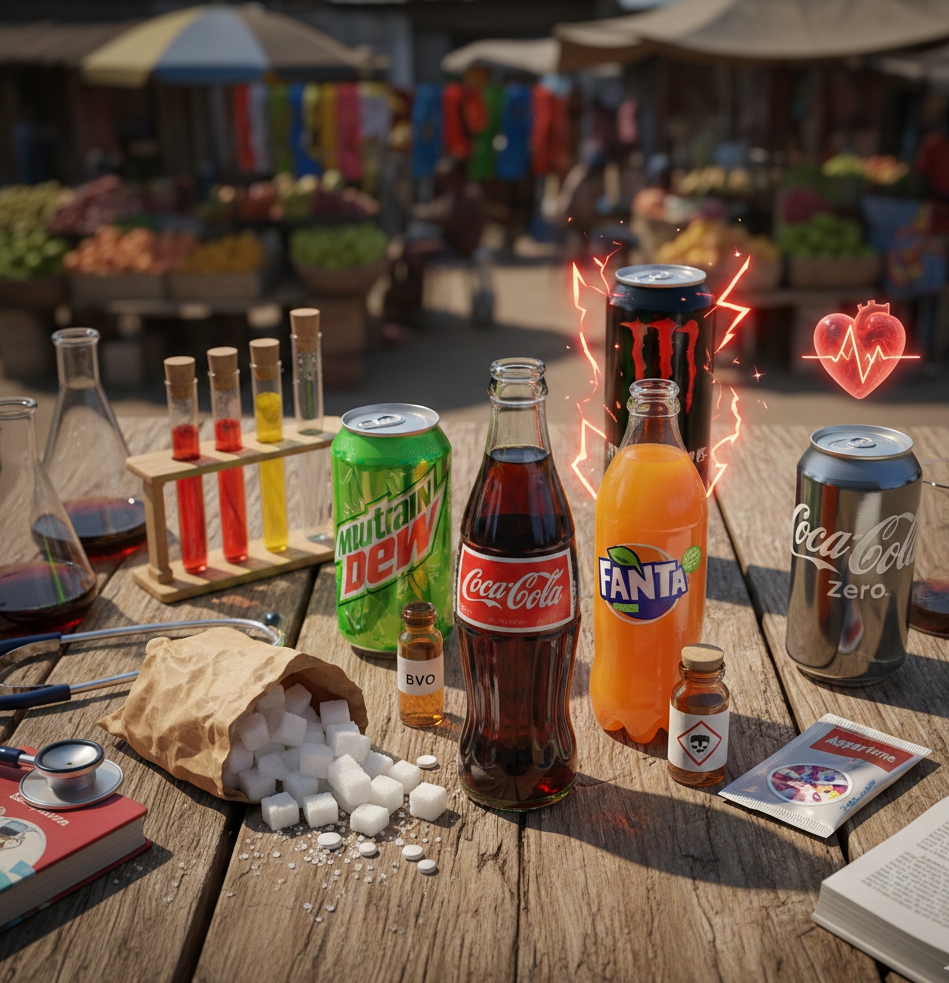
The Harmful Ingredients:
- Aspartame and Acesulfame Potassium (Ace-K): Artificial sweeteners that are hundreds of times sweeter than sugar.
Why It Is Dangerous:
While they have zero calories, research suggests that Aspartame may disrupt the gut microbiome—the healthy bacteria in your stomach. Some studies have linked these sweeteners to an increased risk of stroke and heart disease. Furthermore, because the tongue tastes “sweet” but the body receives no “energy” (calories), it can confuse the brain, leading to increased hunger and weight gain in the long run.
Summary Table of Risks
| Soft Drink Type | Key Harmful Ingredient | Primary Health Risk |
|---|---|---|
| Colas | Phosphoric Acid / High Sugar | Kidney Stones / Diabetes |
| Citrus Sodas | BVO / High Caffeine | Nerve Damage / High Blood Pressure |
| Orange Sodas | Sodium Benzoate + Dyes | Potential Carcinogens / Hyperactivity |
| Energy Drinks | Taurine / Extreme Caffeine | Heart Failure / Dehydration |
| Diet Sodas | Aspartame | Metabolic Confusion / Gut Issues |





 Doctor Brandy Harmon