
Ways of extinguishing fire, remains very important in every home. This is because when fire breaks out of control, it becomes a devastating force. While modern technology has given us high-tech chemical extinguishers and complex suppression systems, there are numerous ways to extinguish fire using natural elements which had been in use before now.
To extinguish a fire naturally, you have to understand that for a fire to exist, it needs three things: Heat, Fuel, and Oxygen. To put it out, you must remove at least one of these elements.
1. Using Earth and Soil
One of the oldest and most reliable natural extinguishers is the ground beneath our feet. Soil, sand, and dirt are incredibly effective at stopping small to medium-sized fires. It’s is hence advice, that every hom used have a sand bucket, enough to save the day, for fire fighters arrives.
Note: Never use soil on a delicate electronic device or a grease fire in a kitchen if you can avoid it, as it could cause permanent damage or splashing. However, in an outdoor survival scenario, it is your best friend.
- How it works: Soil works primarily by smothering. When you heap dirt onto a flame, you cut off its supply of oxygen. Without oxygen, the chemical reaction of combustion cannot continue.
- The Cooling Effect: If the soil is damp, it also helps lower the temperature of the fuel, tackling the “Heat” part of the Fire Triangle.
- Best for: Campfires, small brush fires, and even small liquid spills.
2. Water
Water is the most common natural fire suppressant. It is readily available in many environments and is highly effective at absorbing heat. Although this depends on the intensity of the fire. For some fire outbreak, water even promotes burning outwards explosion.
Hence it’s advisable to mix enough detergent in waters before using it. The detergent helps reduce the level of oxygen drastically, for effectiveness. This doesn’t still make it the best approach; depending of the type of fire.
- The Cooling Mechanism: Water doesn’t just “wet” the fire; it absorbs massive amounts of thermal energy. As water turns into steam, it carries heat away from the fuel source.
- When NOT to use Water: 1. Grease/Oil Fires: Water is heavier than oil. If you pour water on a grease fire, it sinks, flashes into steam instantly, and causes the burning oil to explode outward. 2. Electrical Fires: Natural water contains minerals and conducts electricity. Using it on a live wire could lead to electrocution.
3. Using Natural Fabrics
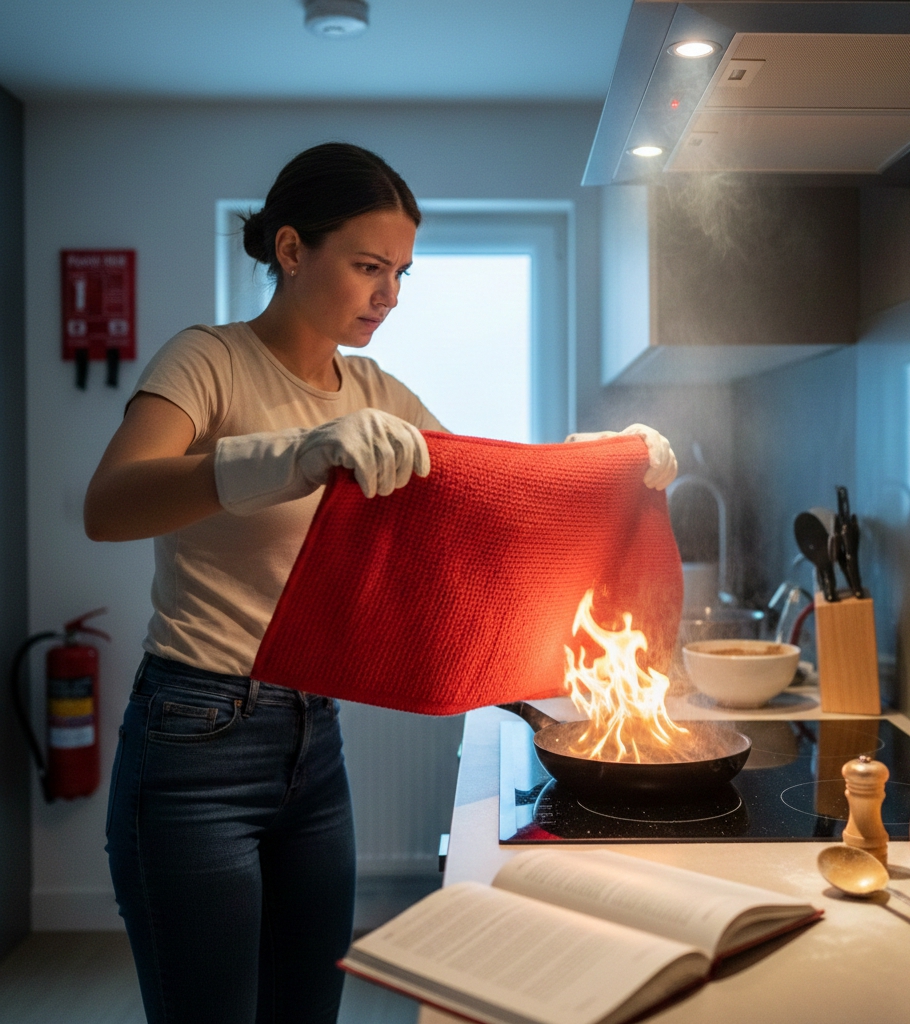
If you don’t have an official “fire blanket,” you might be standing on a fence. The fire blank is a must in every home. Usually must be hung in the kitchen, in case of little fire outbreak. However, certain natural fibers can serve the same purpose. This method is all about removing Oxygen.
- Wool: Wool is naturally flame-resistant. It has a high ignition temperature and often self-extinguishes. A heavy wool blanket can be used to cover a small fire, cutting off the air.
- Heavy Cotton: If a cotton rug or heavy denim clothing is soaked in water first, it becomes an excellent tool for slapping out a grass fire or covering a small stove fire.
- The Technique: You should never “fan” the fire with the cloth. Instead, lay it carefully over the flames to create a seal, or use a firm “beat-down” motion to crush the flame against the ground.
4. Baking Soda and Salt
If a fire breaks out on your gas cooker, you might already have two powerful natural chemicals in your pantry.
- Baking Soda (Sodium Bicarbonate): When heated, baking soda releases carbon dioxide (CO_2). Since CO_2 is heavier than oxygen, it sinks onto the fire and suffocates it. It is essentially a natural version of a dry chemical extinguisher.
- Salt: Salt is excellent for grease fires. It creates a physical barrier between the fuel and the oxygen and helps dissipate the heat. It takes a lot of salt to do the job, so don’t be shy—pour the whole container if necessary.
- Note: Never use flour or baking powder. These are organic powders that can actually ignite or cause a dust explosion.
5. Using the “Beating” Method
In wildland or grass fires, fire-fighting crews often use a method called “beating.” This is a physical way to remove the “Heat” and “Oxygen” simultaneously.
- Natural Tools: You can use green leafy branches (deciduous branches are best, as pine needles contain flammable resins).
- The Process: By hitting the edge of a fire with green boughs, you are physically crushing the flames and momentarily displacing the oxygen. The moisture in the green leaves also provides a slight cooling effect.
- Strategy: This is best used for “creeping” fires—low-intensity flames moving through grass or leaves.
6. Fuel removal Method
If you cannot stop the flame, you can stop the fire by removing what it eats. This is known as removing the Fuel.
- Dry Scrape: In a forest or field, you can use a stick or your boots to scrape away dry leaves, twigs, and moss until you reach bare mineral soil.
- The Gap: By creating a “trench” or a gap of non-flammable space, the fire reaches the edge and simply runs out of energy.
- Controlled Backburning: In extreme cases, professionals start a small, controlled fire to burn toward the main fire. Once the two fires meet, there is no fuel left for either, and they both go out.
Natural Extinguishing Methods table
| Method | Primary Element Removed | Best Used For |
|---|---|---|
| Soil/Sand | Oxygen (Smothering) | Campfires, small ground fires |
| Water | Heat (Cooling) | Wood, paper, fabric fires |
| Wool Blanket | Oxygen (Smothering) | Small kitchen fires, person on fire |
| Baking Soda | Oxygen (CO_2 release) | Small grease/stove fires |
| Green Branches | Oxygen/Heat (Beating) | Grass and leaf fires |
| Firebreak | Fuel | Wildfires, spreading brush fires |






 Doctor Brandy Harmon