
Nigeria: A Simple Guide on causes of appendicitis in Nigeria and the world.
Appendicitis has remained one of the most common reasons people end up in emergency surgery, not just in Nigeria, but across the world. However, in Nigeria, the way we eat, our environment, and how quickly we seek medical help play a massive role in how this condition affects us.
While the word “causes of appendicitis” sounds scary, understanding what causes it and how to spot it early can save lives. This article breaks down everything you need to know in simple language.
What is the Appendix?
The appendix is a small, thin tube (shaped like a finger or a worm) that hangs off the beginning of the large intestine. In most people, it sits in the lower right side of the abdomen.
For a long time, doctors thought it was a “useless” organ. Today, many scientists believe it might act as a “safe house” for good bacteria that help our digestion. But, like a small pipe in a house, if it gets blocked, it causes big trouble. This is why preventions from getting blocked remains sacrosanct.
What is Appendicitis?
Appendicitis is simply the inflammation (swelling and redness) of the appendix. When the opening of the appendix gets blocked, bacteria inside the tube start to multiply rapidly. This leads to:
- Swelling
- Pus formation
- Severe pain
- The risk of the appendix “bursting” (rupturing)Causes of Appendicitis in Nigeria
Causes of appendicitis in Nigeria
In Nigeria, several factors good be linked to why someone might suddenly develop this condition. Here are the most common causes:
1. Hardened Stool (Fecaliths)
This is perhaps the most common cause. Sometimes, a small piece of stool (poop) becomes very hard and gets stuck in the opening of the appendix. Because the appendix is a “dead-end” street, if the entrance is blocked, nothing can get out. Mucus builds up, bacteria grow, and the appendix begins to swell.
2. Low Fiber Diet
In recent times, more Nigerians move toward “Western” diets, and hence eating more processed flour, instant noodles, white bread, and sugary snacks. This increases the rate of constipation.
Traditionally, Nigerian meals like Amala, Pounded Yam, and Akpu are high in fiber if prepared naturally. Nigerians are encouraged to eat more of native foods, over processed foods.
- How it leads to appendicitis: A low-fiber diet makes stool harder and slower to move through the gut. This increases the chance of those “hardened stool” blocks mentioned above.
3. Intestinal Worms and Parasites
In some remote parts of Nigeria, especially where clean water and sanitation are challenges, intestinal parasites (like roundworms) are common. Sometimes, these worms can crawl into the opening of the appendix and block it, leading to an infection.
4. Infections
Nigeria is a tropical country where gastrointestinal infections (stomach bugs) are frequent. If you have a viral or bacterial infection in your gut, the “lymph nodes” (small glands that fight infection) in the wall of your appendix can swell up. When they swell, they can pinch the opening of the appendix shut, triggering appendicitis.
5. Swallowed Objects
Paying less attention to what one swallows could be another major factor. Though rare, swallowing non-food items can cause a blockage. In Nigeria, there are local myths about swallowing seeds (like orange or guava seeds). While most seeds pass through safely, occasionally a seed or a small bone fragment can get trapped in the appendix.
Signs Of Appendicitis
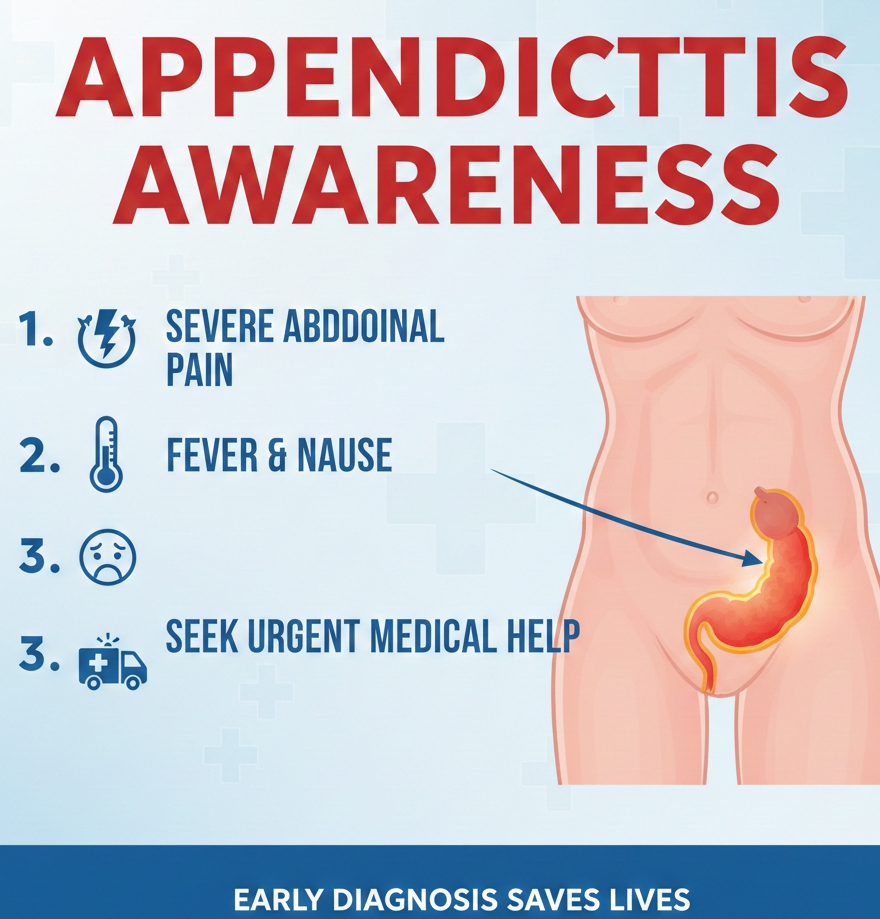
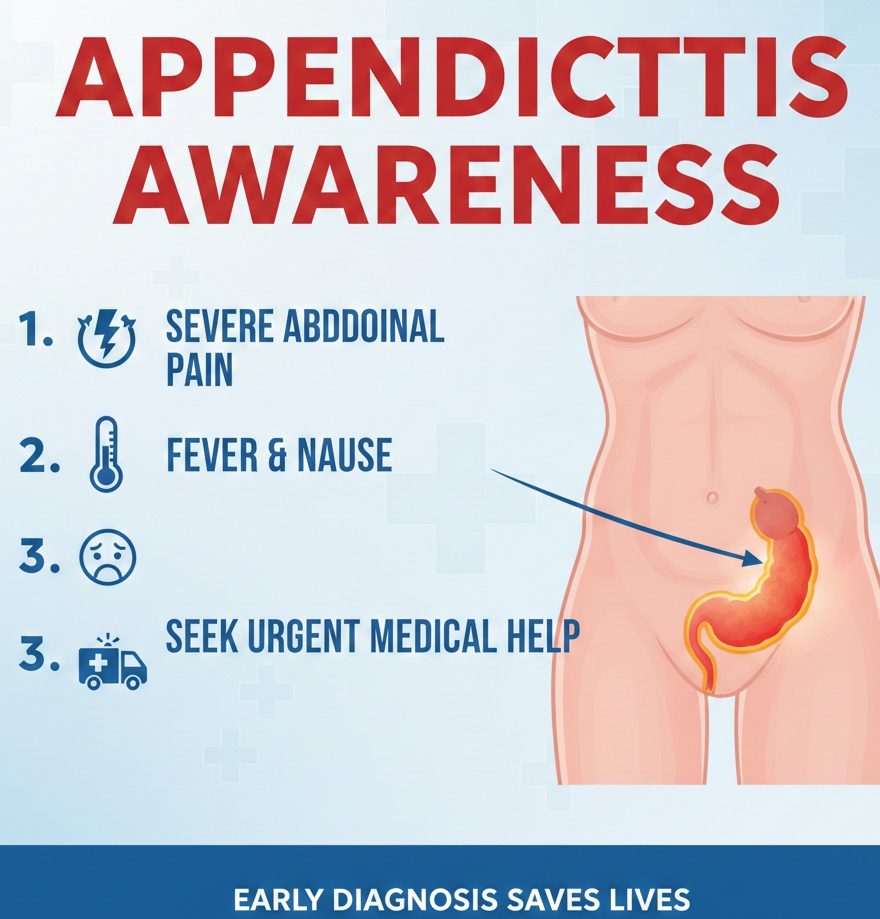
In other to be free from appendicitis, knowing the cause is important, but knowing the symptoms is what saves lives. In Nigeria, many people mistake appendicitis for “heavy malaria” or “stomach upset.”
The typical “Warning Signs” include:
- The Moving Pain: It usually starts as a dull ache around the belly button and then moves to the lower right side of the stomach.
- Loss of Appetite: You suddenly don’t want to eat anything.
- Nausea and Vomiting: Feeling like you want to throw up shortly after the pain starts.
- Fever: A mild fever that gets worse as the inflammation grows.
- Pain when Moving: Coughing, walking, or even bumping into something makes the pain in your lower right side feel sharp and unbearable.
Timing Matters in Nigeria
In many Nigerian communities, the first reaction to stomach pain is to visit a chemist for “painkillers” or to take herbal mixtures (agbo).
This can be dangerous. Painkillers can hide the symptoms of appendicitis while the infection gets worse. If the appendix isn’t removed or treated quickly, it can burst. If it bursts, the infection spreads throughout the entire abdomen (a condition called Peritonitis). This is a life-threatening emergency.
How to prevent Appendicitis
While you can’t always prevent appendicitis, you can significantly lower your risk by focusing on your gut health:
- Eat Your Fiber: Don’t abandon our local vegetables! Eat plenty of Ugu, Ewedu, Okra, and fruits like pawpaw and mango. Fiber keeps your stool soft and moving.
Don’t Ignore Pain: If you have sharp pain in your lower right stomach that lasts more than a few hours, skip the “self-medication” and see a doctor
Stay Hydrated: Drink plenty of water to prevent constipation.
Deworm Regularly: Especially for children and those living in areas with poor water systems, regular deworming (as advised by a doctor) can prevent parasitic blockages.




 Doctor Brandy Harmon