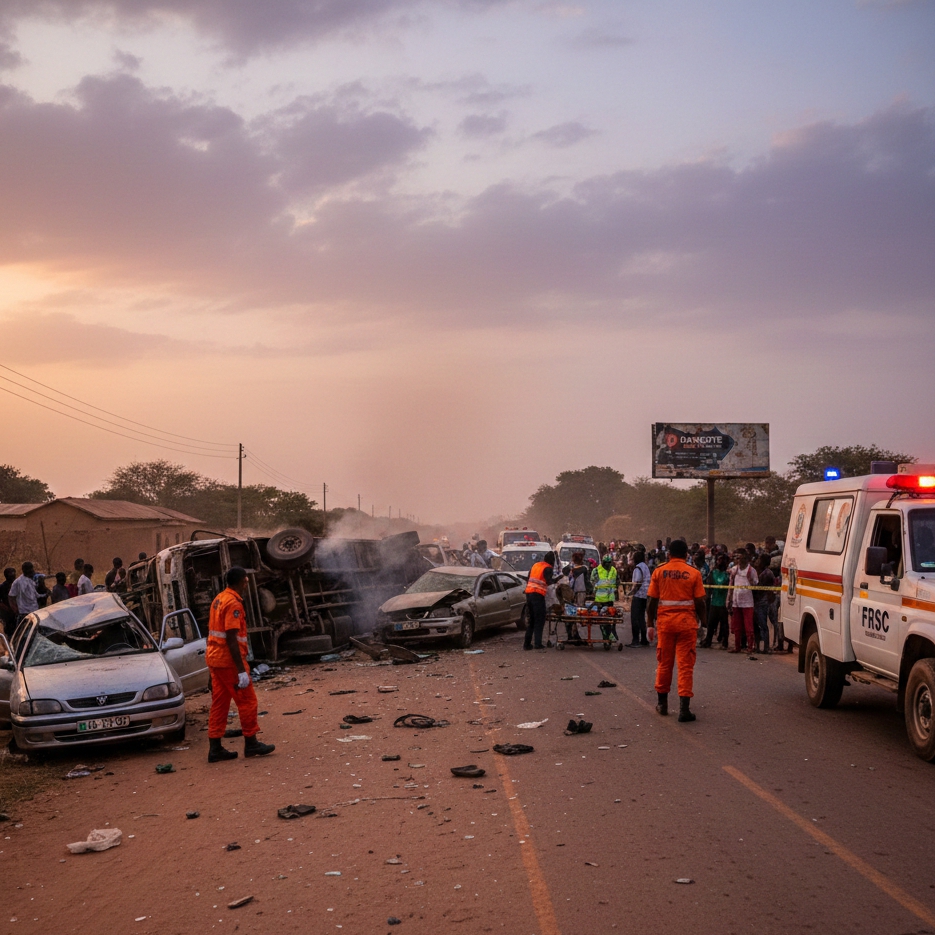
Causes of road accidents should be prevented, for the safety of road users. Almost every year, thousands of lives are cut short, and families are plunged into mourning due to some some basic causes of road accidents in Nigeria.
These accidents has remained a silent pandemic that claims more lives than many infectious diseases, yet often remains treated as a series of isolated “mishaps” rather than a systemic crisis.
Without wasting much time, let’s consider some of the actual causes of road accidents:
Causes of Road Accidents In Nigeria
The Human Element
According to reports, the human factors, remains a stronghold in the several causes of road accidents in Nigeria. According to data from the Federal Road Safety Corps (FRSC), human error accounts for over 90% of road crashes in Nigeria. This isn’t just about a lack of skill; it’s about a culture of driving that often prioritizes speed and bravado over safety and life.
1. Over Speeding
Over-speeding is the leading cause of road traffic deaths in Nigeria. In a country where time is money and the struggle for survival is real, many commercial and private drivers treat the highway like a racetrack. There is a psychological thrill—and a perceived economic benefit—to reaching a destination faster.
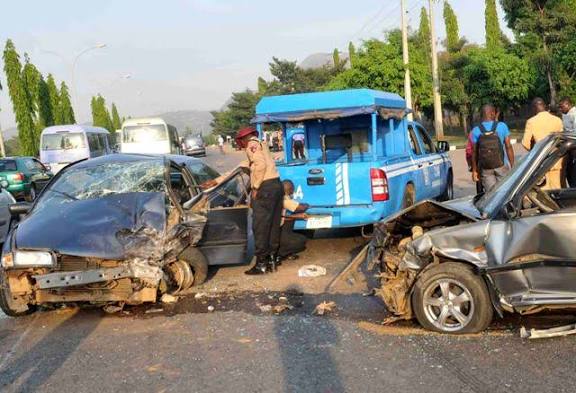
However, as speed increases, the field of vision narrows and the distance required to stop safely grows exponentially. At high speeds, a simple tire burst or a sudden pedestrian crossing becomes a death sentence.
2. The Distraction Factor
In the age of hyper-connectivity, the mobile phone has become a lethal weapon on Nigerian roads. Whether it is a commercial driver coordinating his next passenger or a private car owner checking a social media notification, distracted driving is a growing menace. A split second of inattention at 100km/h means a vehicle travels nearly 30 meters “blind.”
That distance is often the difference between a near-miss and a fatal collision. You’ll agree with me that most drivers have become fund of making calls whilst driving, texting whilst driving and even select playlists, whilst still on steering. These distractions have led to many lose of lives and even properties.
3. Substance Use and Fatigue
In Nigeria, you could easily find many long-distance drivers, particularly those operating heavy-duty trucks and interstate buses, resort to substances to stay awake. From local gins (“paraga”) to stimulants and harder drugs, the goal is often to conquer fatigue.
Ironically, these substances impair judgment, slow down reaction times, and create a false sense of confidence. Fatigue itself, even without drugs, is a major killer. Drivers who stay behind the wheel for 12 to 18 hours straight eventually succumb to “micro-sleeps”—seconds of unconsciousness that lead to devastating head-on collisions.
4. The Culture of Impatience
Just as every one wants to get to their destination in time, may drivers have resorted to overtaking at sharp bends, driving against traffic (popularly known as “one-way”), and refusing to yield at intersections. In many Nigerian cities, like Lagos, port Harcourt, Abuja, etc. you can see traffic rules are seen as suggestions rather than laws. No body is ready to obey the rules. Rather, only few drivers are willing to obey.
5. Bad Roads
As we try to blame drivers for the cases of road accidents in Nigeria, we won’t fail to consider the road itself, as it often sets the stage for disaster. The state of Nigerian infrastructure is a significant contributor to the high accident rate.
1. Potholes and “Craters”
Nigerian highways are notorious for potholes that can swallow a small car. These are not just minor inconveniences; they are active hazards. A driver swerving suddenly to avoid a pothole can collide with a vehicle in the next lane or lose control entirely. At night, these traps become invisible, turning a routine journey into a game of Russian roulette.
2. Absence of Road Signs and Markings
A well-designed road, gives the driver a guide through signs and markings. Like imo State, Anambra, and almost all the states in Nigeria, there are often no little or no warnings for sharp curves, narrow bridges, or steep inclines. Road markings that delineate lanes are frequently worn away, leading to “lane-drifting” and side-swipe accidents.
3. Poor Lighting and Visibility
The majority of Nigerian highways lack functional street lighting. Night driving is performed in near-total darkness, relying solely on vehicle headlights. When those headlights are poorly maintained or incorrectly aimed, the risk of hitting stationary objects, pedestrians, or broken-down vehicles increases dramatically.
Mechanical Failures
In Nigeria, a vehicle’s “roadworthiness” is often determined by its ability to move, rather than its ability to stop safely. The economic hardship in the country has led to a poor maintenance culture.
- Tire Bursts: Many Nigerians rely on “Tokunbo” (used) tires or “expired” new tires that have sat in warehouses for years. In the intense Nigerian heat, these tires are prone to sudden failure.
- Brake Failure: Overloading is a common sight. When a vehicle designed for 5 tons carries 10, the braking system is pushed beyond its limit. On hilly terrains, this often results in the terrifying sight of a runaway truck.
- Rickety Vehicles: Many commercial vehicles on the road are essentially “carcasses” held together by wire and hope. Missing side mirrors, non-functional brake lights, and smoky exhausts contribute to a hazardous driving environment.
Institutional and Policy Gaps
The Federal Road Safety Corps (FRSC) and other traffic agencies work tirelessly, but they face uphill battles.
- Enforcement Challenges: Corruption remains a hurdle. When a driver can “negotiate” their way out of a fine for a serious traffic violation, the deterrent effect of the law vanishes.
- Driver Licensing: The process of obtaining a driver’s license in Nigeria is often more about who you know or what you pay than your actual ability to drive. Many people on the road have never opened a highway code, let alone passed a rigorous driving test.
- Emergency Response: When accidents do happen, the “Golden Hour”—the first 60 minutes where medical intervention is most effective—is often lost. Lack of functional ambulances, heavy traffic congestion, and poor hospital proximity mean that many victims die from injuries that could have been treated.
The Way Forward: A Shared Responsibility
Solving the crisis of road accidents in Nigeria requires more than just filling potholes or buying more patrol cars. It requires a fundamental shift in our national psyche.
- Strict Enforcement: We must move to a digital enforcement system where traffic violations are captured by cameras and fines are linked to vehicle registration, reducing human interference and corruption.
- Infrastructure Investment: Road construction must include long-term maintenance contracts. It is cheaper to fix a crack today than to rebuild a collapsed road tomorrow.
- Education and Advocacy: Road safety education should be integrated into the school curriculum from a young age. We need to raise a generation of Nigerians who see seatbelts and speed limits not as burdens, but as life-savers.
- Passenger Empowerment: Passengers must find their voice. If a driver is reckless, passengers must collectively demand he slows down or report him to the authorities at the next checkpoint.






 Doctor Brandy Harmon