
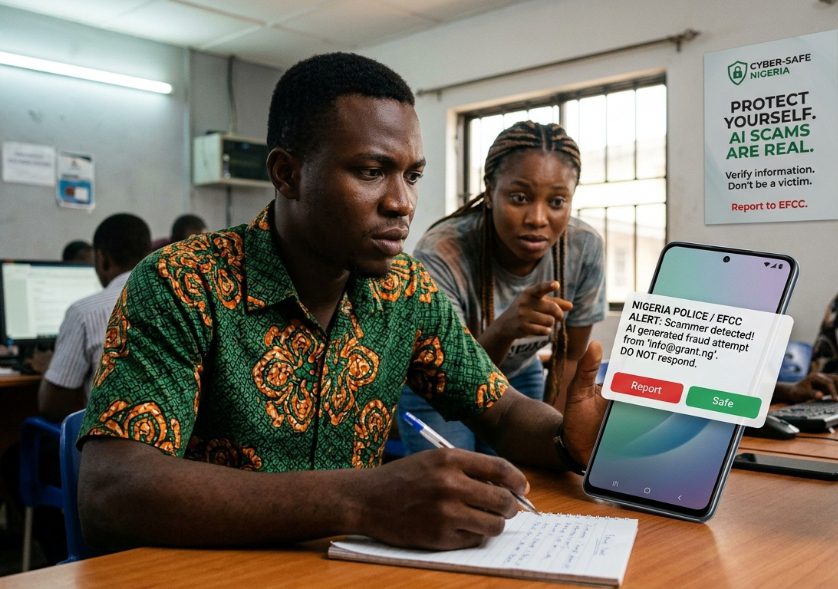
AI Scams In Nigeria (2026): Navigating AI Scams in Nigeria
Nigeria has always been a hub of digital innovation, from the bustling tech hubs in Yaba, Lagos, to the growing remote workforce in Port Harcourt and Abuja. However, as we embrace the power of Artificial Intelligence (AI) to grow our businesses and simplify our lives, a new shadow is growing alongside it. Fraudsters are no longer just sending poorly spelled emails; they are using sophisticated AI tools to create scams that look, sound, and feel incredibly real.
Understanding how these “Next-Gen” scams work is no longer just for tech experts—it is a survival skill for every Nigerian with a smartphone.
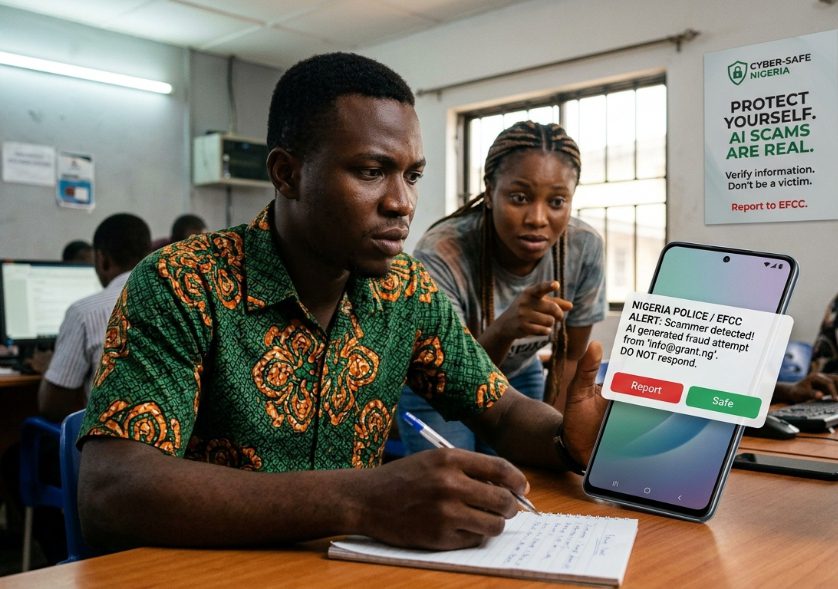
How AI is Increasing the Scam Game in Nigeria
In the past, you could spot a “Yahoo” format by looking for bad grammar or strange foreign bank details. Today, AI has removed those red flags. Scammers use Large Language Models (LLMs) to write perfect English or even fluent, natural-sounding Pidgin, Yoruba, Igbo, and Hausa.
1. The Voice Cloning Trap (The “Emergency” Call)
Imagine receiving a call from your brother who lives in Lekki. The voice sounds exactly like his—the same tone, the same slang, even the same way he clears his throat. He sounds panicked, claiming he’s been detained at a checkpoint or involved in a “small accident” near the Third Mainland Bridge and needs ₦50,000 sent to a specific account immediately to “settle” the situation.
This is AI Voice Cloning. By using a clip of someone’s voice from a social media video (Instagram reels or TikTok), scammers can feed it into AI software that allows them to type text and have it spoken in that person’s exact voice.
2. Deepfake Videos and Video Calls
We are seeing a rise in “celebrity” giveaways. You might see a video of a popular Nigerian billionaire or a famous pastor on Facebook, moving their lips and telling you to invest in a new crypto platform to “double your money” in celebration of their birthday.
These are Deepfakes. AI mimics the facial expressions and speech patterns of famous figures. More dangerously, scammers are now using real-time deepfake filters during WhatsApp video calls. You think you are looking at a distressed relative or a bank official, but it is a digital mask.
3. Hyper-Realistic Job Scams
With the high competition for jobs in cities like Enugu and Ibadan, many young Nigerians are searching for remote work. Scammers create fake company websites and use AI to generate professional-looking offer letters, LinkedIn profiles, and even AI-written interview questions. They lure victims with the promise of earning in Dollars, only to ask for a “laptop setup fee” or “insurance clearance” once the victim is hooked.
4. AI-Enhanced Romance Scams
In the “Lover’s Lane” of the internet, AI is being used to write poetic, deeply personal, and convincing love letters. Scammers use AI image generators to create photos of people who do not exist—stunningly beautiful individuals who look like they belong in a high-end lounge in Victoria Island. Because these people don’t exist, you can’t find their photos through a “reverse image search,” making the scam harder to detect.
Formats of AI Scams In Nigeria (2026)
Scammers tailor their lies to fit the Nigerian lifestyle. They know what we care about: family, faith, “japa” (migration) ambitions, and the hustle for a better life.
- The “Japa” Hustle: Scammers target people frequenting visa processing centers or searching for “Study in Canada” or “Work in UK” keywords. They use AI to generate fake visa approval notices or sponsorship letters that look identical to official documents from the UK Home Office or IRCC.
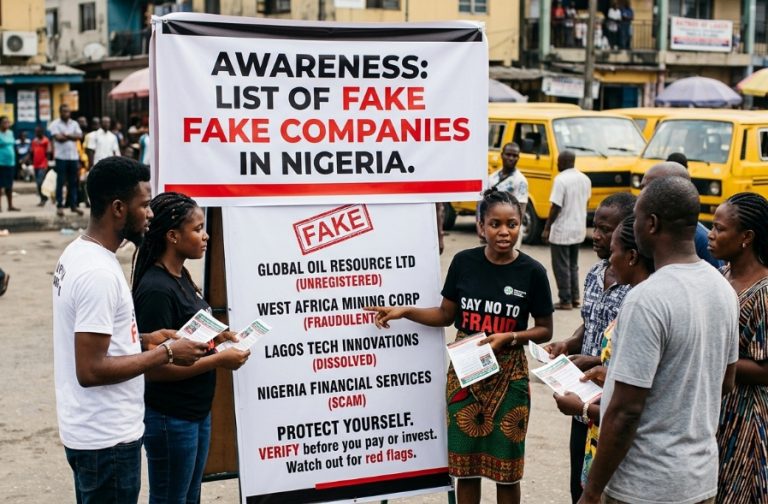
- The Market Square (Online Shopping): On Instagram and Twitter (X), fake vendors target shoppers looking for deals in popular markets like Ariaria International Market or Onitsha Main Market. They use AI to create “customer testimonial” videos and high-definition product images that never existed.
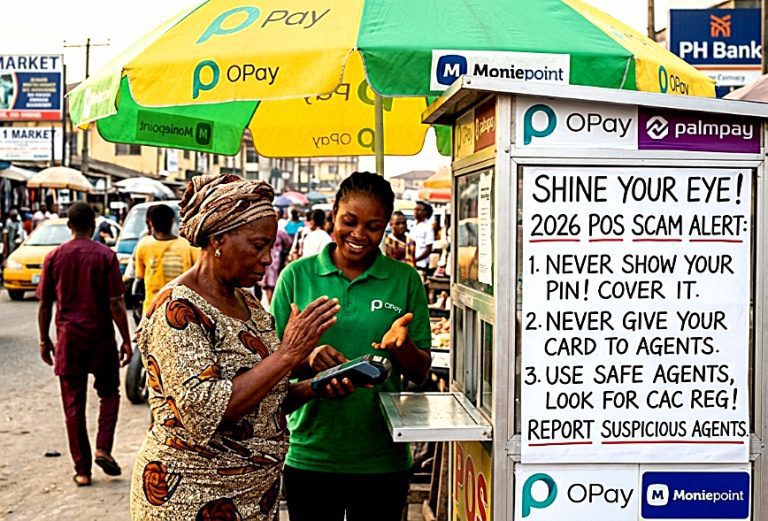
- The POS and Banking Sector: Scammers often target busy business owners at POS points in crowded areas like Balogun Market. They use AI-generated SMS alerts that look like “Successful” credit transactions to trick vendors into releasing goods.
How to Detect an AI Scam in Nigeria 2026
While AI is smart, it isn’t perfect. There are almost always “glitches in the matrix” if you know where to look.
1. Analyze the Audio (The “Pause” Test)
AI voice clones often have a slightly robotic rhythm. If you suspect a call from a loved one is a scam:
- Ask a “Secret Question”: Ask something only the real person would know. “What did we eat at my last birthday?” or “What is the name of our neighbor’s dog?”
- Listen for silence: AI often has a slight delay (latency) between you speaking and the “cloned voice” responding.
2. Look for Visual “Artifacts” in Videos
Deepfakes struggle with certain movements.
- The Eye Test: Does the person blink naturally? Often, deepfake eyes look static or blink in a strange pattern.
- The Edge Blur: Look at the area where the person’s face meets their hair or neck. If it looks blurry, flickering, or “shimmery” when they move, it is likely a deepfake.
- The Side View: Ask the person on a video call to turn their head fully to the side or wave their hand in front of their face. AI often “breaks” when something moves across the face.
3. Check the Tone and Urgency
Scams thrive on Fear, Uncertainty, and Doubt (FUD). If a message demands money immediately or warns that an account will be blocked in “10 minutes,” it is a red flag. Real organizations—like your bank or a government agency—will never pressure you into a panic-driven financial decision over a DM or a phone call.
4. Verify the Source
- Email Headers: Even if the email looks professional, click on the sender’s name to see the actual email address. If it ends in @gmail.com instead of the official company domain (e.g., @accessbankplc.com), it is a fake.
- Website Authenticity: Use tools like “Who.is” to see when a website was created. If a “big company” website was only registered two weeks ago, run away.
The Nigerian “Anti-Scam” Protocol
To protect yourself and your family (especially our elders who may not be tech-savvy), adopt these habits:
The “Double-Check” Rule
Before sending money to anyone claiming to be a friend or relative in distress, hang up and call them back on their regular phone line (not WhatsApp). If their phone is off, call another mutual friend or family member to verify their location.
Protect Your Digital Footprint
Limit the amount of clear audio of your voice and high-resolution videos of your face on “Public” social media profiles. Scammers need “source material” to clone you. By keeping your profiles private or being mindful of what you share, you starve the AI of the data it needs.
Use Two-Factor Authentication (2FA)
Always enable 2FA on your WhatsApp, Instagram, and Banking apps. This ensures that even if a scammer uses AI to trick you into giving up a password, they still can’t enter your account without the physical code sent to your phone.
Use the “Common Sense” Filter
If an investment promise sounds too good to be true—like “Double your money in 24 hours while sitting in your house in Port Harcourt”—it is 100% a scam. No legitimate AI or human business can guarantee such returns.
States in Nigeria with high AI scam Threats
In Nigeria, the risk of AI-powered scams is not uniform. Fraudsters typically focus on areas with high digital activity, significant financial transactions, and large populations of “aspiring” individuals (students and job seekers).
Based on current trends and crime reports, the following states and regions carry the highest risk:
1. Lagos State (The Epicenter)
As Nigeria’s financial and tech hub, Lagos is the primary target for AI scams.
- Risk Profile: High concentration of high-net-worth individuals and corporate headquarters.
- Specific Threats: Deepfake Business Email Compromise (BEC). Scammers use AI to clone the voices of CEOs or CFOs in companies located in Victoria Island, Ikoyi, and Marina to authorize fraudulent wire transfers.
- Lifestyle Trigger: The “hustle” culture. High-definition AI-generated “luxury lifestyle” ads on social media lure residents into fake real estate or forex schemes.
2. Abuja (FCT)
The seat of power is a major hotspot due to the presence of government officials and diplomatic missions.
- Risk Profile: High. Scammers frequently use AI to impersonate top government functionaries.
- Specific Threats: Political Deepfakes and “Grant” Scams. Residents in areas like Maitama and Asokoro are targeted with AI-generated videos of ministers or agency heads promising “Federal Government Empowerment Grants” or “Contract Opportunities.”
- Lifestyle Trigger: Access to power. AI-generated documents that look perfectly official (with forged signatures and seals) are used to trick people into paying “processing fees.”
3. Rivers State (Port Harcourt)
As an oil and gas hub, Port Harcourt sees significant circulation of wealth, making it a lucrative target.
- Risk Profile: Medium-High.
- Specific Threats: Job Scams. AI is used to create hyper-realistic recruitment portals for the oil sector. Many young graduates in Port Harcourt are targeted with AI-written offer letters from “multinational companies” that require “safety equipment” payments.
- Lifestyle Trigger: High-cost living. Scammers use AI to create fake discount shopping or errand-service ads targeting the middle class.
4. Kwara State (Ilorin)
Ilorin has emerged as a significant hub for “Advanced Fee Fraud,” which has now evolved with AI.
- Risk Profile: Rising.
- Specific Threats: Romance and Identity Scams. Scammers in Ilorin are increasingly using AI chatbots and image generators to maintain long-term fraudulent relationships with victims globally, using AI to bridge language and cultural gaps.
5. Oyo State (Ibadan) and Enugu State
These states are high-risk primarily because of their massive student populations (University of Ibadan, UNN).
- Risk Profile: High for Youth/Students.
- Specific Threats: Educational Fraud. In 2026, major rings were busted for using AI-generated videos to impersonate JAMB officials and university registrars, selling fake “admission upgrades” or exam “expo” services to desperate students and parents.
Summary Table: Risk by Category
| State | Primary AI Threat | Key Target Demographic |
|---|---|---|
| Lagos | Voice Cloning & Corporate Impersonation | Business Owners & Corporate Execs |
| Abuja | Political Deepfakes & Fake Grants | Civil Servants & Contractors |
| Rivers | AI Job Scams (Oil & Gas focus) | Job Seekers & Graduates |
| Kwara | AI Romance & Identity Scams | International & Local Online Users |
| Oyo/Enugu | Educational & Exam Fraud | Students |


 Doctor Brandy Harmon


Voice cloning scams are especially concerning since they can mimic someone you trust so convincingly. It really makes you rethink how we verify calls and messages before taking any action. Awareness and caution seem more important than ever in this AI-driven landscape.
The section on voice cloning really stood out to me—it’s scary how scammers can mimic someone you trust so convincingly. It really underscores the need to double-check calls and messages, even from close friends or family. Awareness seems like the best defense in this new landscape of AI scams.
I had no idea that AI scams could generate messages in local languages like Yoruba or Hausa—it really shows how sophisticated these tactics have become. It makes me realize that staying aware and questioning even familiar-looking communications is more important than ever.
I appreciate how this article brings awareness to the growing sophistication of scams in Nigeria. It’s crazy how scammers are now using AI to mimic voices and even local dialects. We need to educate ourselves on these new tactics to stay protected.
AI scams are evolving so quickly, and it’s terrifying to think that even the most tech-savvy people can be duped. Voice cloning is one of the most disturbing trends—imagine receiving a call from a loved one and thinking it’s real!
It’s crazy how scammers have evolved with AI! The voice cloning part really hit home for me, especially since I can imagine how easy it would be to get tricked in an urgent situation like that. This is a wake-up call to all of us to stay extra vigilant.
Reading this really makes me realize that staying safe online today requires more than just avoiding obvious scams. Understanding how AI can mimic voices or generate convincing messages is becoming an essential part of everyday digital security. Awareness is really the first step in protecting ourselves.
This is a real eye-opener about how scammers are getting more advanced. I’m sure many Nigerians are completely unprepared for these types of scams—especially with how AI can replicate even our local dialects and voices.
I’ve noticed a lot of these scams in my own circle. The scariest part is how real the calls sound. It’s more important than ever to verify things through trusted channels before acting on anything.